




Costa-Rica GM-QP004 Automotive parts die casting
Category:
Costa-RicaAutomotive parts
Product Description
Product name: GM-QP004 Automotive parts die casting
Molding process: cold-type die-casting
Product material: ADC 12 aluminum alloy
Surface treatment: electrophoresis / passivation
Opening mold cycle: 45 days
Production cycle: 45 days
Other remarks: Support for graph customization
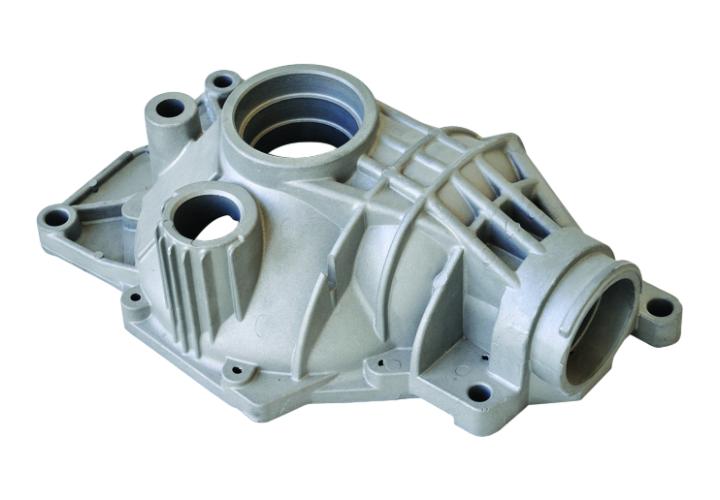
Automotive parts die casting is an advanced manufacturing process that uses a die-casting mold to quickly inject liquid metal into the mold cavity under high pressure to form various complex shapes of automotive parts.
Parts produced by this process have many advantages. First, it can achieve high-precision and high-quality molding, ensuring the dimensional accuracy and stable performance of the parts. Its good density gives the parts high strength and durability.
In the automotive industry, many key parts are produced by die casting. For example, important parts such as engine blocks, cylinder heads, and transmission housings play a decisive role in the performance and reliability of automobiles. Automotive parts die casting can efficiently produce these large and complex parts to meet the needs of large-scale automobile production.
Automotive parts die casting also has the advantage of lightweight. With the increasing requirements for energy conservation and emission reduction of automobiles, lightweighting has become an important development direction. Die-casting aluminum alloys and other materials can significantly reduce the weight of parts while ensuring strength, thereby improving the fuel efficiency and performance of automobiles.
GM Diecasting Technology Co.,Limited.
Add:Building 1-5, Chongke Road, Shipai Town, Dongguan City, Guangdong Province
Email:henry@gmdiecastingtech.com
Email:lily@gmdiecastingtech.com
Tel:+8613680864695