



09
2024
-
01
Integrated die casting industry special report: The future of integrated die casting has arrived
Author:
Die casting is the main processing form of automobile aluminum alloy parts
Die casting is the main processing form of automobile aluminum alloy parts. The traditional automobile manufacturing process mainly includes stamping, welding, painting and final assembly. Among them, stamping is the use of small and medium-sized presses and molds, which are commonly used in the molding of steel, and aluminum alloy parts are usually die-casting. Die casting is a method of loading metal into the mold cavity at high speed under high pressure, and forming and solidifying under pressure to obtain castings.
The permeability of aluminum alloy in large parts of new energy vehicles has increased rapidly
The permeability of large parts such as chassis, body and suspension has been rapidly improved, and the amount of aluminum used for bicycles is expected to reach about 250/300kg in 2025/2030. According to CME Group analysis, by 2025, the amount of aluminum used in pure trams will reach 226.8kg, with a permeability of 50%, and by 2030, the amount of aluminum will reach 283.5kg, with a permeability of 56%, mainly driven by the rapid increase of the permeability of chassis, suspension, wheels, transmission systems and other parts. According to China's energy-saving and new energy vehicle technology roadmap, the specific goal of aluminum for bicycles in China is to reach 250kg in 2025 and 350kg in 2030.
Tesla opens a new chapter of integrated die casting
Tesla opens a new chapter of integrated die casting. The essence of integrated die casting is to achieve a major breakthrough in the size of parts and application parts of aluminum alloy high die casting technology, refers to the use of large tonnage die casting machine, a number of separate, dispersed parts are highly integrated, die-casting molding into several large aluminum castings, so as to replace a number of parts first stamping and welding or riveting combination. In September 2020, Musk announced for the first time that the integrated die-casting technology would be used to produce the rear body floor of the Model Y, and would gradually replace more than 370 structural parts of the entire body floor with 2-3 large die-casting parts, opening a new chapter in the integration of aluminum alloy die-casting for large automotive components.
Integration of die casting take-off, industrial chain competing layout
Upstream heat free alloy material: the first mover advantage is obvious, high customer viscosity
Material end: Heat free alloy is the inevitable choice for integrated die casting. Heat treatment-free alloy refers to the special alloy formula, after the completion of die casting, the casting can obtain ideal mechanical properties without heat treatment, and can avoid the deformation of the workpiece during heat treatment (high temperature solution and aging treatment). Because the integrated casting will produce small deformation due to heat treatment in the casting process, the deformation of large pressure casting will be further amplified, resulting in the product does not meet the requirements of the vehicle, so the ultra-large parts can not be heat treated, and the heat-treat-free aluminum alloy material is an inevitable choice.
The composition of the material is complex, and the patent advantage is obvious. The composition of alloy material is the core barrier of heat-treat-free alloy. The first mover certifies the composition of alloy material formula and iterates on this basis to reduce cost and increase efficiency. Late-comer companies need to bypass the original patented formula composition design to develop a heat-free alloy material that meets the requirements of the Oems, and even if they successfully bypass the patent, they still face the problem of performance and cost trade-offs.
Long certification cycle, high customer stickiness. Thermo-free alloy usually requires long-term cooperation with downstream processing and vehicle factories for material research and development, pilot, mass production, the cycle is relatively long, and the follow-up such as replacing other thermo-free alloy materials also need to change the mold of the follow-up process, change the stamping process, etc., so the customer viscosity is high.
Upstream heat free alloy materials: the first-mover advantage is obvious, and the competitive pattern is better
The main non-heat treatment alloys on the market can be divided into Al-Si series and Al-Mg series two categories, basically Al as the base element, adding and controlling the content and relationship of silicon, magnesium, iron, copper, manganese, zinc and other elements, so that the material has the required strength, toughness, ductility and so on. Among them, Al-Si system is the mainstream route at present. Industry status: Foreign materials are more mature, and domestic enterprises have broken through: the representative companies of foreign heat-free alloys are Alcoa, Rheinhart and Magna, in addition, Tesla has also joined the ranks of self-research; In China, research institutions and enterprises such as Lizhong Group, Shanghai Jiaotong University College of Materials, Guangdong Hongtu, and NiO have made breakthroughs in heat-treatment-free materials. There are few patent enterprises in China and the competition pattern is good. At present, the domestic Lizhong Group has independent intellectual property rights, mature technology and mass production capacity, other manufacturers for overseas alloy manufacturers, domestic universities and other authorized use, need to pay a certain patent fee, the cost is relatively high, or product performance, yield is not as expected, difficult to large-scale application.
Upstream die casting equipment: Large die casting machine is the key to integrated die casting
Large die-casting machine is the key to the realization of integrated die casting: when the raw material is injected into the mold hole at high pressure, a holding force will be generated. The die locking unit of the die casting machine must provide enough clamping force to make the mold not be stretched open and ensure that the product molding meets the accuracy requirements. The larger the parts, the higher the clamping force requirements of the die casting machine. The process is complex, the development cycle is long, and the capital investment is large. The process of large-scale die-casting machine is complicated, and the complicated system needs to be coordinated and controlled, which requires high theory and experience. From the "design - test - design" cycle is very long, the history of die casting machine clamping force is generally 1 to 2 years to have a leap, each lift of about 500 tons; Large die casting equipment cost is high, once the trial failure will bring huge economic losses, trial and error cost is high. Industry pattern: Lijin technology leads the development of large die-casting machines. The global die-casting machine enterprises that can produce more than 6000T mainly include the Swiss Buhler Group abroad, and the domestic Lijin Technology, Haitian Metal, and Yizhi. Among them, Yidra, a wholly-owned subsidiary of Lijin Technology, provided Tesla with the world's first 6000T die casting machine in 2020, and the 12000T super intelligent die casting unit jointly developed with Guangdong Hongtu was officially put into use, and cooperated on the development project of 16000T(tons) super intelligent die casting unit. According to the casting headlines, Lijin technology die-casting machine has a market share of more than 56% in China, and the global market share of ultra-large die-casting machines is more than 90%.
Upstream die casting mold: the design is difficult, and the material and process requirements are high
Die casting mold: Die casting mold is of great importance to the success of die casting, and has been considered to be the key process equipment for die casting production, and the barriers are mainly concentrated in: (1) the design is difficult. The wall thickness of ultra-large integrated die casting is varied, the structure is complex, the filling distance is long, and the flow path is varied. The gating system design is difficult to meet the requirements of many aspects, and the ideal filling process and solidification process are even more difficult to realize. (2) High material performance requirements. The price of the integrated die casting mold is about 10 million yuan per set, and the conventional life cycle is only more than 80,000 times, and the durability of the mold directly affects the production cost. In addition, the integrated die casting machine has greater clamping force, greater stress on the mold, and adverse superimposed working conditions, which may lead to premature cracking failure of the mold. (3) High process requirements. Due to the large scale of the mold, the thermal control of the mold is more difficult. Reasonable design of cooling/heating system is a prerequisite for effective control of mold temperature in production. Too high or too low temperature will cause defects in castings and affect product quality. Major competitors in the industry: large die-casting molds have high barriers, which correspond to fewer domestic listed companies. At present, the main manufacturers in this link include Guangzhou type Chamber, Ningbo Seveda, Wencan Xiongbang (a subsidiary of Wencan Shares), Ruihu Mold and so on.
Midstream die casters: high technological and financial barriers
Middle die casting link: the yield is low, and the ultra-high vacuum and high pressure die casting link is the key. The integrated die casting process includes mold closing, pouring, vacuum opening, cavity vacuum exhaust, injection, mold opening, parts taking, spraying, and mold closing again. The die casting process is very important for the production of qualified parts, which requires a long time of debugging and exploration of parameter configuration, in which the vacuum link is usually equipped with a high-precision vacuum sensor to ensure that the gas is completely discharged, otherwise the mechanical properties and yield will be affected. According to China Die casting network, Tesla's earliest integrated die casting pass rate of 65% to 72%, gross profit margin can reach 30%, after the revision of casting quality standards in February 2022, the pass rate reached more than 80%, and the yield of mainstream die casting enterprises is basically maintained at more than 80%. Financial barriers are high. A die casting island usually requires die casting machine, die casting mold, peripheral equipment and other groups, usually 9000T domestic die casting machine price in 50-60 million yuan, mold in 10-20 million yuan, the total price of well-configured die casting island is generally in 200-300 million yuan. Clear first-mover advantage. Midstream die casting enterprises include Wencan Shares, Topu Group, Guangdong Hongtu, Xusheng Shares, Meilishin, etc., through the procurement of large-scale die casting equipment and cooperation with car companies to lay out automotive integration die casting. At present, Wencan Shares has been developing related products since 2011, and is in a leading position in the competition for key customer projects in the industry.
Downstream car enterprise layout integration die casting
Oems have laid out integrated die casting. In addition to Tesla, the domestic car manufacturing new forces such as Nio, ideal, polar Krypton, Xiaopeng and so on have followed up, the current integrated die casting models are mainly Tesla Model Y, NIO ET5, polar Krypton 009, HiPhi Y, Xiaopeng G6, in addition, ideal, Ask and other car companies application of integrated die casting models or will be listed in the second half of this year. Traditional automobile manufacturers such as Volvo, Volkswagen, Mercedes and so on are also accelerating the industrialization process of integrated die casting. Tesla: In 2020, it announced that the Model Y will adopt an integrated rear floor assembly, and more than 70 parts will be die-cast into 1-2. In 2022, the Austin plant in Texas will increase the integrated die-casting of the front floor (front longitudinal beam) on the basis of the rear floor. In September 2023, Model3 was officially released, priced from 259,900, using integrated casting; The Cybertruck, which is scheduled to hit the market by the end of Q3 2023, will feature a front underbody all-in-one casting and two all-in-one castings on the sides and rear. It is expected that 2025 or will be the first to achieve the total car.
Long-term purchasing model is the trend of The Times
From the perspective of business model, there are two main ways for car companies to produce integrated die-casting models: one is the self-developed mode of the Oems: the Oems directly purchase die-casting machines, molds and materials and other materials, and build their own factories to produce die-casting parts. This model is represented by Tesla, Xiaopeng and Volvo. The other is the procurement mode: the Oems directly purchase the die-casting parts from the die-casting manufacturers, and the relevant materials are purchased by the die-casting manufacturers, and the die-casting parts are delivered to the oems after production. This model is represented by Gaohe, Weilai and ideal. In the long run, the future automotive integration die casting will gradually return to the procurement mode. On the one hand, the self-built production line of the Oems is under great financial pressure, and the operation management in the later stage is very energy consuming. Tesla, the representative of the self-developed model, has begun to cooperate with die casting manufacturers, and plans to solve the future new production capacity by external procurement. The main purpose of self-research is to master integrated die casting knowhow, so as to facilitate technical communication with suppliers in the future.
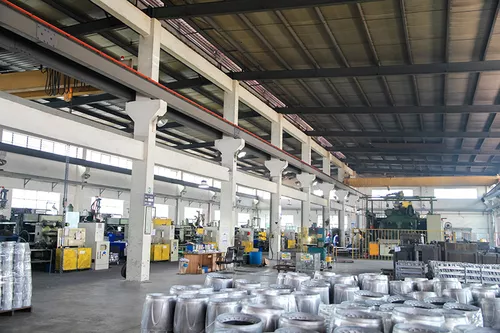
Integrated die casting
06
2026-10
Innovative Uses of Zinc Alloy in Sustainable Energy Solutions
03
2026-10
The Versatility and Advantages of Aluminum Alloys in Modern Applications
30
2026-09
The Art of Crafting Durable Aluminum Casts for Industrial Applications
27
2026-09
The Essential Guide to Die Casting: Techniques, Applications, and Benefits
24
2026-09
How to Stay Ahead in Mold Forging: Insights for Manufacturers
21
2026-09
The Essential Guide to Forging Molds: Understanding Their Importance in Manufacturing
18
2026-09
Zinc Die Casting Parts: A Premier Cost-Effective Solution for Customized Manufacturing
GM Diecasting Technology Co.,Limited.
Add:Building 1-5, Chongke Road, Shipai Town, Dongguan City, Guangdong Province
Email:henry@gmdiecastingtech.com
Email:lily@gmdiecastingtech.com
Tel:+8613680864695