



GM-QP006 automotive parts die casting
Key words:
Classification:
Product Description
Product name: Auto Parts
Molding process: cold-type die-casting
Product material: ADC 12 aluminum alloy
Surface treatment: electrophoresis / passivation
Opening mold cycle: 45 days
Production cycle: 45 days
Other remarks: Support for graph customization
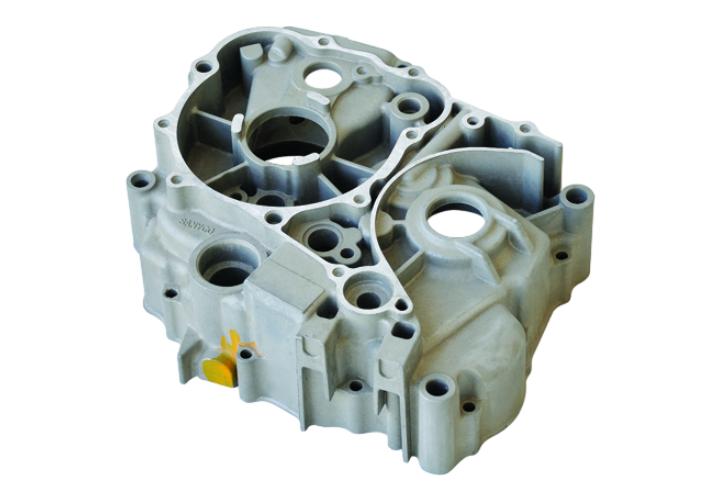
Automotive parts die casting is a key manufacturing process that plays an important role in the automotive industry.
Automotive parts produced by die casting have many advantages. First, it can achieve high-precision molding of complex-shaped parts to ensure a perfect fit with the vehicle design. This is essential for some parts with special structural and functional requirements.
The die casting process is also characterized by high efficiency. It can quickly produce a large number of parts of the same specifications to meet the needs of large-scale automobile production, effectively improve production efficiency and reduce costs.
In terms of quality, die casting automotive parts die casting usually have good density and mechanical properties. They can withstand the various stresses and environmental conditions faced by the car during driving, ensuring the safety and reliability of the car.
In automobiles, many key parts can be manufactured by die casting, such as engine blocks, gearbox housings, suspension parts, etc. These automotive parts die casting have a direct impact on the performance and overall quality of the car.
Related Products

Inquiry
GM Diecasting Technology Co.,Limited.
Add:Building 1-5, Chongke Road, Shipai Town, Dongguan City, Guangdong Province
Email:henry@gmdiecastingtech.com
Email:lily@gmdiecastingtech.com
Tel:+8613680864695