



23
2025
-
01
Prototype aluminum casting
Author:
Prototype aluminum casting plays an extremely important role in modern manufacturing, showing unique advantages both in the early stages of product development and in specific small-batch production needs.
1. Material properties
Advantages of aluminum
Aluminum is a lightweight and strong metal material. Its low density makes prototype aluminum casting light, which is very critical in many application scenarios with strict weight requirements, such as the prototyping of parts in the aerospace field. The use of aluminum castings can reduce unnecessary weight burden while simulating actual product performance.
Aluminum has good thermal conductivity and electrical conductivity. In the prototype development of electronic equipment, aluminum castings can effectively conduct heat and prevent electronic components from overheating. At the same time, its conductivity also provides a basis for some prototypes that require electrical connections.
Aluminum also has good corrosion resistance. Even in some harsh environmental conditions, such as humid or slightly chemical corrosion risk environments, prototype aluminum casting can maintain relatively stable performance and extend its service life.
Casting adaptability
Aluminum has excellent casting properties. It has a low melting point, which requires relatively less energy during the casting process and reduces production costs. At the same time, aluminum can fill the mold cavity well and can produce prototype parts with complex shapes and high precision requirements.
2. Manufacturing process and precision
Casting process
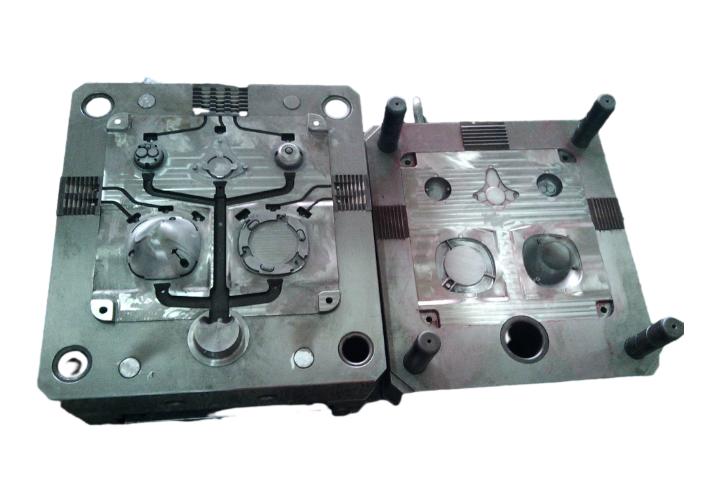
Prototype aluminum casting adopts a variety of casting processes, such as sand casting, die casting, etc. Sand casting is suitable for making prototypes with larger sizes and relatively simple structures. Its advantages are low mold cost and high flexibility, and the mold design can be quickly adjusted to meet different prototype requirements. Die casting is suitable for making small, high-precision, and complex-shaped aluminum castings. During the die casting process, aluminum liquid is quickly injected into the mold under high pressure, which can form a very fine internal structure and a smooth surface.
Precision control
When manufacturing Prototype aluminum casting, precision control is crucial. Modern casting technology can control dimensional errors within a very small range. For example, in the prototype production of automotive engine parts, advanced measurement and control methods are used to ensure that the key dimensions of aluminum castings are consistent with design requirements, thereby providing accurate data support for subsequent testing and improvements.
3. Application scenarios
Product research and development
In the process of new product development, Prototype aluminum casting is an effective means to quickly verify design concepts. Engineers can test the mechanical properties and assembly of products by making aluminum casting prototypes. For example, in the design of new mechanical products, aluminum casting prototypes are made to check whether the fit between the various parts is reasonable and whether there are interferences.
Small batch production
For some small batch production tasks with special needs, Prototype aluminum casting can be used directly as a product. For example, in some customized high-end mechanical products or limited edition industrial artworks, the unique texture and performance of aluminum castings can meet customers' requirements for quality and personalization.
Prototype aluminum casting has become an indispensable part of modern manufacturing due to its material properties, manufacturing process advantages and a wide range of application scenarios, providing strong support for innovation and product development.
Prototype aluminum casting
24
2026-09
How to Stay Ahead in Mold Forging: Insights for Manufacturers
21
2026-09
The Essential Guide to Forging Molds: Understanding Their Importance in Manufacturing
18
2026-09
Zinc Die Casting Parts: A Premier Cost-Effective Solution for Customized Manufacturing
15
2026-09
The Intricacies of Zinc Alloy Die Casting: A Comprehensive Overview
12
2026-09
The Art of Creating Intricate Designs Through Aluminum Prototype Casting
09
2026-09
Understanding Die Casting Molds: The Backbone of Precision Manufacturing
06
2026-09
Unlocking Potential: The Advantages of Custom Aluminum Casting in Machinery Manufacturing
GM Diecasting Technology Co.,Limited.
Add:Building 1-5, Chongke Road, Shipai Town, Dongguan City, Guangdong Province
Email:henry@gmdiecastingtech.com
Email:lily@gmdiecastingtech.com
Tel:+8613680864695