



17
2024
-
04
The Evolution of Die Casting: From Past to Present
Author:
# **The Origins of Die Casting**
Die casting has a rich history that dates back to ancient times. The process of casting metal into intricate shapes using molds has been practiced for centuries, with early civilizations such as the Egyptians and Chinese pioneering the technique. However, it wasn't until the 19th century that die casting as we know it today began to take shape.
## **The Industrial Revolution and Die Casting**
During the Industrial Revolution, the demand for mass-produced metal parts skyrocketed, leading to the development of more efficient and precise casting methods. In the late 1800s, the invention of the first die casting machine revolutionized the industry, allowing for faster and more accurate production of metal components.
### **Advancements in Die Casting Technology**
As technology continued to advance, die casting techniques became more sophisticated and precise. The introduction of hot-chamber and cold-chamber die casting machines in the early 20th century further improved the efficiency and quality of the process.
#### **The Rise of Aluminum Die Casting**
In the mid-20th century, aluminum die casting emerged as a popular alternative to traditional methods due to its lightweight and durable properties. The automotive and aerospace industries quickly adopted aluminum die casting for the production of complex components, leading to a surge in demand for die-cast parts.
---
# **Modern Innovations in Die Casting**
In recent years, die casting technology has continued to evolve, with new advancements pushing the boundaries of what is possible. From the use of advanced materials to the implementation of automation and robotics, the die casting industry has undergone a significant transformation.
## **High-Pressure Die Casting**
One of the most significant innovations in die casting is the development of high-pressure die casting techniques. This method allows for the production of complex and detailed parts with high precision and efficiency, making it ideal for a wide range of applications.
### **The Role of 3D Printing in Die Casting**
3D printing has also had a profound impact on die casting, allowing for the creation of intricate molds and prototypes with unprecedented speed and accuracy. By combining traditional die casting methods with 3D printing technology, manufacturers can now produce custom parts with unmatched precision.
#### **Environmental Sustainability in Die Casting**
With an increased focus on sustainability and environmental responsibility, die casting companies are exploring new ways to reduce waste and energy consumption. The adoption of eco-friendly materials and processes is becoming increasingly common, as manufacturers strive to minimize their impact on the environment.
---
# **The Future of Die Casting**
Looking ahead, the future of die casting is filled with exciting possibilities. Advancements in materials science, automation, and digital technology are poised to revolutionize the industry once again, opening up new opportunities for innovation and growth.
## **Industry 4.0 and Smart Manufacturing**
The integration of Industry 4.0 principles into die casting operations is set to transform the way parts are produced. Smart manufacturing technologies, such as IoT sensors and predictive analytics, are enabling manufacturers to optimize production processes and improve quality control.
### **Additive Manufacturing and Die Casting**
The fusion of additive manufacturing and die casting is a burgeoning field that holds great promise for the industry. By combining the flexibility of 3D printing with the efficiency of die casting, manufacturers can create complex parts with unprecedented speed and precision.
#### **Sustainable Practices and Circular Economy**
As the push for sustainability continues to gain momentum, die casting companies are exploring innovative ways to reduce waste and promote a circular economy. From recycling scrap metal to implementing closed-loop systems, the industry is committed to minimizing its environmental footprint.
---
# **Conclusion**
In conclusion, the evolution of die casting from its origins to the present day is a testament to the ingenuity and creativity of the manufacturing industry. By embracing new technologies and sustainable practices, die casting companies are poised to lead the way in shaping the future of metal part production. As we look towards the future, the possibilities for innovation and advancement in die casting are truly limitless.
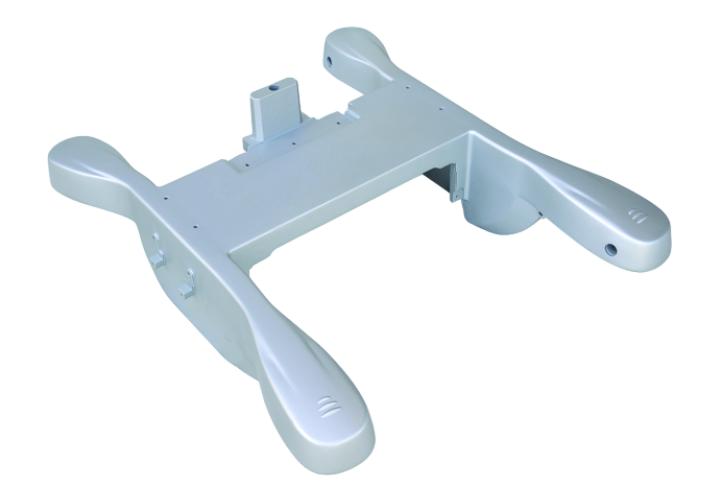
die casting machine
30
2026-09
The Art of Crafting Durable Aluminum Casts for Industrial Applications
27
2026-09
The Essential Guide to Die Casting: Techniques, Applications, and Benefits
24
2026-09
How to Stay Ahead in Mold Forging: Insights for Manufacturers
21
2026-09
The Essential Guide to Forging Molds: Understanding Their Importance in Manufacturing
18
2026-09
Zinc Die Casting Parts: A Premier Cost-Effective Solution for Customized Manufacturing
15
2026-09
The Intricacies of Zinc Alloy Die Casting: A Comprehensive Overview
12
2026-09
The Art of Creating Intricate Designs Through Aluminum Prototype Casting
GM Diecasting Technology Co.,Limited.
Add:Building 1-5, Chongke Road, Shipai Town, Dongguan City, Guangdong Province
Email:henry@gmdiecastingtech.com
Email:lily@gmdiecastingtech.com
Tel:+8613680864695