04

2025

-

03

Mold forging

Author:


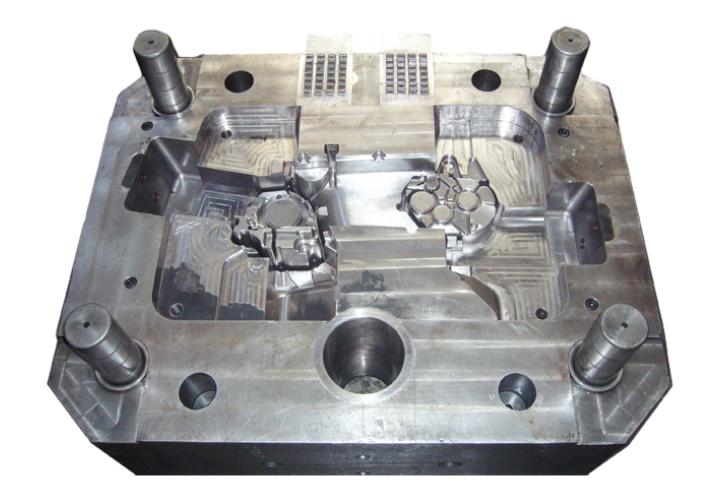
Mold forging is first of all highly accurate. Through carefully designed and manufactured molds, metal materials can be accurately molded into the required shape and size. Whether it is a complex mechanical part or a component with a special structure, mold forging can ensure that the dimensional tolerance of each product is controlled within a very small range, thereby meeting the high-precision industrial needs. For example, in the aerospace field, mold forging can ensure the accuracy of the dimensions of key parts such as engine components, thereby ensuring flight safety and equipment performance.
Mold forging

In terms of production efficiency, mold forging performs well. Once the mold is installed and debugged, large-scale production can be carried out. Compared with traditional free forging, mold forging greatly shortens the production time of a single product. This high efficiency is vividly reflected in large-scale production industries such as automobile manufacturing. Many parts of automobiles, such as crankshafts and connecting rods, can be produced quickly and stably through mold forging to meet the high-speed requirements on automobile production lines.

Mold forging can also significantly improve the quality of products. During the forging process, the metal material undergoes plastic deformation under the constraints of the mold, and the internal grain structure is optimized, which improves the mechanical properties of the product. For example, forged metal parts have higher strength, hardness and toughness, which is crucial for mechanical parts that bear high loads and high stresses, and can extend the service life of products and reduce the occurrence of failures.

Mold forging

21

2026-11

Unveiling the Secrets of Zinc Alloy Die Casting in Enhancing Die Mold Durability

Unveiling the Secrets of Zinc Alloy Die Casting in Enhancing Die Mold Durability Table of Contents 1. Introduction to Zinc Alloy Die Casting 2. Understanding Zinc Alloy Properties 3. Benefits of Zinc Alloy Die Casting 4. The Importance of Die Mold Durability 5. Enhancing Die Mold Durability with Zinc Alloys 6. Advanced Die Casting Techniques 7. Real-World Applications

18

2026-11

Understanding Prototype Aluminum Casting: A Key to Efficient Manufacturing

Prototype aluminum casting is a vital component in the development of various mechanical parts and components used in many industries. This process allows engineers and designers to create initial models or prototypes of their designs, enabling them to test functionality, refine specifications, and optimize designs before full-scale production begins. The advantages of using aluminum for prototypi

15

2026-11

Unleashing the Potential of Die Casting Mold in Modern Production

Unleashing the Potential of Die Casting Mold in Modern Production Table of Contents Introduction to Die Casting Molds What is Die Casting? Benefits of Die Casting Molds in Manufacturing Applications of Die Casting Molds in Various Industries Die Casting in the Automotive Industry Die Casting in the Aerospace Industry Die Casting in the

12

2026-11

Understanding Custom Aluminum Casting: A Key Process in Metal Manufacturing

Custom aluminum casting is a manufacturing technique that involves pouring molten aluminum into a mold to create parts with specific shapes and dimensions. This method is particularly advantageous for producing complex geometries that would be challenging to achieve through traditional machining methods. In the context of mechanical processing and hardware manufacturing, custom aluminum casting en

09

2026-11

Optimizing Performance: The Essential Guide to Zinc Casting for Die Casting Tools

Optimizing Performance: The Essential Guide to Zinc Casting for Die Casting Tools Table of Contents 1. Introduction to Zinc Casting in Die Casting Tools 2. Benefits of Zinc Casting for Die Casting Tools 3. The Zinc Casting Process Explained 4. Common Applications of Zinc Casting in Die Casting 5. Challenges in Zinc Casting and How to Overcome Them 6. Tips for Optimizin

21

2026-10

Understanding Zinc Die Casting: A Comprehensive Guide for Manufacturing Professionals

Zinc die casting is a metal casting process that involves forcing molten zinc alloy into a mold cavity under high pressure. This technique is particularly valued in manufacturing due to its ability to create intricate and precise geometries, making it ideal for various applications across multiple industries. One of the primary advantages of zinc die casting is its ability to produce parts with ex

18

2026-10

Empowering Manufacturers: The Benefits of Die Casting Machines

Empowering Manufacturers: The Benefits of Die Casting Machines Manufacturing has come a long way, and in this journey, die casting machines have emerged as a cornerstone for efficiency, precision, and adaptability. The die casting process is widely used in various industries, providing solutions that significantly enhance production capabilities. This extensive article delves into the myriad benef

15

2026-10

Understanding Aluminum Die Casting: A Key Process in Metal Manufacturing

Aluminum die casting is a highly efficient manufacturing process used to produce complex and precise metal parts. This technique involves forcing molten aluminum into a mold under high pressure. The result is a product that exhibits excellent dimensional accuracy, surface finish, and mechanical properties. As such, aluminum die casting stands out as a preferred method for producing components in v