



25
2025
-
12
Understanding Prototype Aluminum Casting: Innovations in Manufacturing Processes
Author:
The primary advantage of prototype aluminum casting lies in its ability to produce lightweight yet highly durable components. Aluminum, known for its excellent strength-to-weight ratio, is an ideal choice for applications where weight reduction is critical, such as in automotive and aerospace industries. Furthermore, aluminum castings exhibit excellent corrosion resistance, making them suitable for a wide range of environments.
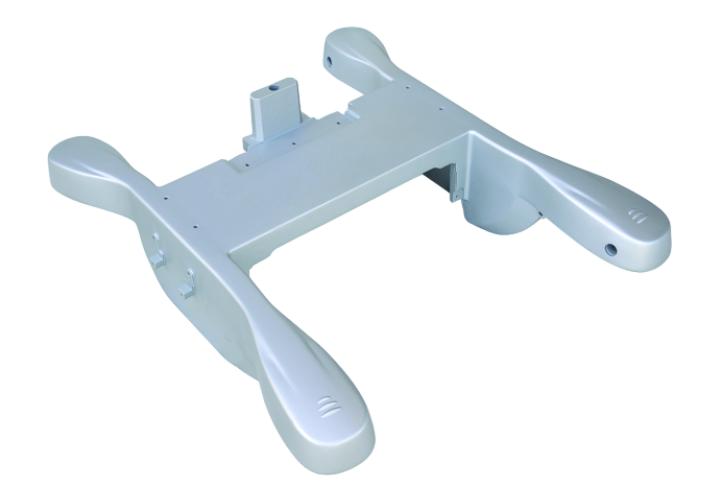
In the prototyping phase, manufacturers can leverage aluminum casting to create precise and intricate designs that may be challenging to achieve with traditional machining methods. The casting process allows for complex geometries and features to be formed in a single operation, reducing assembly time and potential points of failure in the final product. Additionally, the use of aluminum in prototypes facilitates easier machining and finishing, enabling designers to refine their ideas rapidly.
The process of prototype aluminum casting typically begins with creating a mold. This can be accomplished using various techniques, including sand casting, investment casting, or die casting, depending on the required precision and surface finish. Once the mold is prepared, molten aluminum is poured into the cavity, filling it completely. After cooling and solidification, the mold is removed, resulting in a near-net-shape part that often requires minimal post-processing.
One of the key trends in prototype aluminum casting is the integration of advanced technologies, such as computer-aided design (CAD) and computer numerical control (CNC) machining. These technologies enhance the accuracy and efficiency of the casting process. By utilizing CAD software, manufacturers can simulate the casting process and optimize the mold design before physical production, thus reducing waste and minimizing errors.
Moreover, the rise of additive manufacturing techniques has also influenced the field of aluminum casting. Some manufacturers are now experimenting with 3D printing to create molds for aluminum casting, which can significantly reduce lead times and costs associated with traditional mold-making methods.
In summary, prototype aluminum casting serves as a crucial technique in the realm of manufacturing and machining. By allowing for the production of lightweight, strong, and complex components, this method not only enhances the prototyping process but also contributes to overall efficiency and innovation in various industries. As technology continues to evolve, the applications and benefits of prototype aluminum casting are expected to expand, solidifying its role in the future of manufacturing.
prototype aluminum casting
30
2026-09
The Art of Crafting Durable Aluminum Casts for Industrial Applications
27
2026-09
The Essential Guide to Die Casting: Techniques, Applications, and Benefits
24
2026-09
How to Stay Ahead in Mold Forging: Insights for Manufacturers
21
2026-09
The Essential Guide to Forging Molds: Understanding Their Importance in Manufacturing
18
2026-09
Zinc Die Casting Parts: A Premier Cost-Effective Solution for Customized Manufacturing
15
2026-09
The Intricacies of Zinc Alloy Die Casting: A Comprehensive Overview
12
2026-09
The Art of Creating Intricate Designs Through Aluminum Prototype Casting
GM Diecasting Technology Co.,Limited.
Add:Building 1-5, Chongke Road, Shipai Town, Dongguan City, Guangdong Province
Email:henry@gmdiecastingtech.com
Email:lily@gmdiecastingtech.com
Tel:+8613680864695