



03
2025
-
05
Application of mold forging in heavy machinery manufacturing
Author:
Mold forging plays an irreplaceable and important role in the field of heavy machinery manufacturing.
In heavy machinery manufacturing, the manufacturing of many key components relies on mold forging technology. For example, large crane hooks, excavator booms and dipper rod connecting parts, etc. For crane hooks, it needs to withstand huge gravity loads, and the mold forging process can ensure that the hook has high strength and good toughness. During the mold forging process, the metal material undergoes plastic deformation under the precise control of the mold, making the internal structure of the hook uniform and dense, effectively improving its load-bearing capacity.
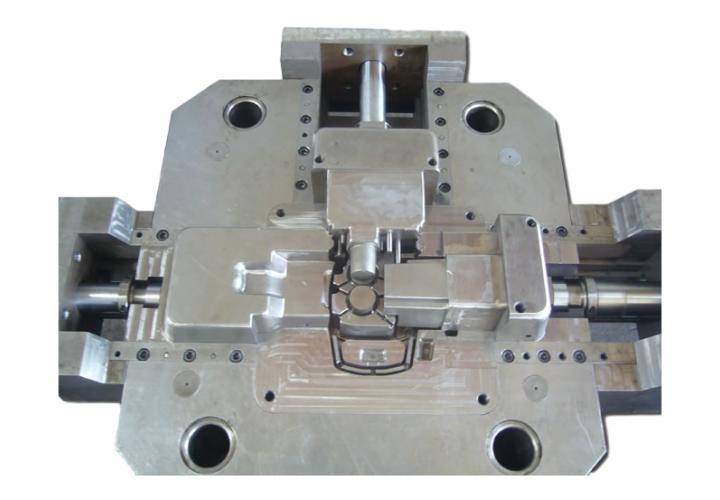
In the manufacturing of shaft parts of heavy machinery, mold forging also shows its prowess. The transmission shafts of heavy machinery are usually large in size and need to transmit huge torque. Through mold forging, the grains of shaft parts can be refined, and the strength and wear resistance of the shaft can be improved. The mold forging process can accurately shape the appearance of the parts according to the specific shape and force requirements of the shaft, reducing the amount of subsequent processing while ensuring the quality of the parts.
Mold forging is of great significance to improving the production efficiency of heavy machinery manufacturing. Compared with traditional free forging and other processes, mold forging can achieve mass production, and the forgings produced have high dimensional accuracy and good consistency. This is extremely beneficial for heavy machinery manufacturing where a large number of parts of the same specifications are required, which can greatly shorten the manufacturing cycle and reduce production costs.
The development of mold forging technology has also promoted the development of heavy machinery manufacturing towards larger and more efficient directions. With the continuous improvement of mold forging equipment, it is possible to mold forge heavy machinery parts with larger sizes and more complex shapes, meeting the growing demand for equipment such as large mining machinery and super-large port cranes.
Mold forging
30
2026-09
The Art of Crafting Durable Aluminum Casts for Industrial Applications
27
2026-09
The Essential Guide to Die Casting: Techniques, Applications, and Benefits
24
2026-09
How to Stay Ahead in Mold Forging: Insights for Manufacturers
21
2026-09
The Essential Guide to Forging Molds: Understanding Their Importance in Manufacturing
18
2026-09
Zinc Die Casting Parts: A Premier Cost-Effective Solution for Customized Manufacturing
15
2026-09
The Intricacies of Zinc Alloy Die Casting: A Comprehensive Overview
12
2026-09
The Art of Creating Intricate Designs Through Aluminum Prototype Casting
GM Diecasting Technology Co.,Limited.
Add:Building 1-5, Chongke Road, Shipai Town, Dongguan City, Guangdong Province
Email:henry@gmdiecastingtech.com
Email:lily@gmdiecastingtech.com
Tel:+8613680864695