



19
2025
-
07
Strategies to improve the service life of aluminum die casting mold
Author:
Aluminum die casting mold faces harsh working conditions such as high temperature, high pressure, and high-speed aluminum liquid scouring during the die casting production process. Improving its service life is crucial to reducing costs and improving production efficiency.
1. Optimal selection of mold materials
High-quality mold materials are the basis for extending the service life. Mold steel with high thermal fatigue resistance, high hardness and good toughness should be selected. For example, H13 steel has good comprehensive properties and can withstand high temperatures and stress changes during aluminum die casting. In addition, for some die-casting molds with special requirements, powder metallurgy mold steel can also be used. This material has uniform and dense structure and better thermal fatigue resistance.
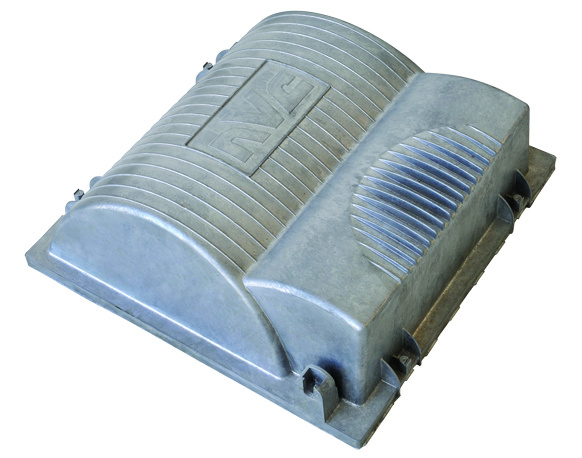
2. Reasonable mold design
Gate and runner system
A reasonably designed gate and runner system can make the aluminum liquid flow evenly and smoothly in the mold cavity. Avoid high-speed aluminum liquid directly impacting the mold cavity wall to reduce scouring wear. The size and shape of the gate should be precisely designed according to the structure and weight of the casting to ensure that the filling speed of the aluminum liquid is moderate.
Cooling system
An efficient cooling system helps control the temperature of the mold. By rationally arranging the cooling channels, the various parts of the mold can be cooled quickly and evenly. This can not only improve production efficiency, but also reduce problems such as mold cracking caused by thermal stress.
3. Improvement of mold manufacturing process
Processing accuracy
Improve the processing accuracy of aluminum die casting mold to ensure that the dimensional accuracy and surface roughness of key parts such as cavity and core meet the requirements. Precision processing can reduce local stress concentration and improve the overall strength of the mold.
Heat treatment process
The correct heat treatment process can improve the hardness and toughness of the mold. During the heat treatment process, strictly control parameters such as heating speed, quenching temperature, and tempering times to eliminate residual stress inside the mold material.
4. Use and maintenance of molds
Reasonable die casting process parameters
In die casting production, reasonable die casting temperature, pressure, speed and other process parameters should be set according to the characteristics of the mold and casting. Avoid excessive wear or damage to the mold due to improper process parameters.
Regular maintenance
Clean, inspect and repair the aluminum die casting mold regularly. Remove aluminum chips, oxides and other impurities from the mold surface in time, check the wear of the mold, and repair or replace the worn parts.
Aluminum die casting mold
Previous Page
30
2026-09
The Art of Crafting Durable Aluminum Casts for Industrial Applications
27
2026-09
The Essential Guide to Die Casting: Techniques, Applications, and Benefits
24
2026-09
How to Stay Ahead in Mold Forging: Insights for Manufacturers
21
2026-09
The Essential Guide to Forging Molds: Understanding Their Importance in Manufacturing
18
2026-09
Zinc Die Casting Parts: A Premier Cost-Effective Solution for Customized Manufacturing
15
2026-09
The Intricacies of Zinc Alloy Die Casting: A Comprehensive Overview
12
2026-09
The Art of Creating Intricate Designs Through Aluminum Prototype Casting
GM Diecasting Technology Co.,Limited.
Add:Building 1-5, Chongke Road, Shipai Town, Dongguan City, Guangdong Province
Email:henry@gmdiecastingtech.com
Email:lily@gmdiecastingtech.com
Tel:+8613680864695