



31
2025
-
03
wholesale Zinc alloy mold
Author:
Zinc alloy mold is an important type of mold in modern manufacturing, with many unique advantages.
1. Material properties
Zinc alloy has good fluidity, which enables it to fill the mold cavity well during mold manufacturing. Whether it is a complex shape or a fine structure, zinc alloy can be accurately replicated to ensure that the parts produced have high precision.
The melting point of zinc alloy is relatively low, which can reduce energy consumption during mold manufacturing and shorten the mold manufacturing cycle. Compared with some alloys with high melting points, it can be produced more efficiently and improve production efficiency.
Zinc alloy has good mechanical properties, has certain strength and hardness, and can withstand a certain degree of working pressure. Zinc alloy mold can work stably in some small to medium-sized injection molding or die-casting production.
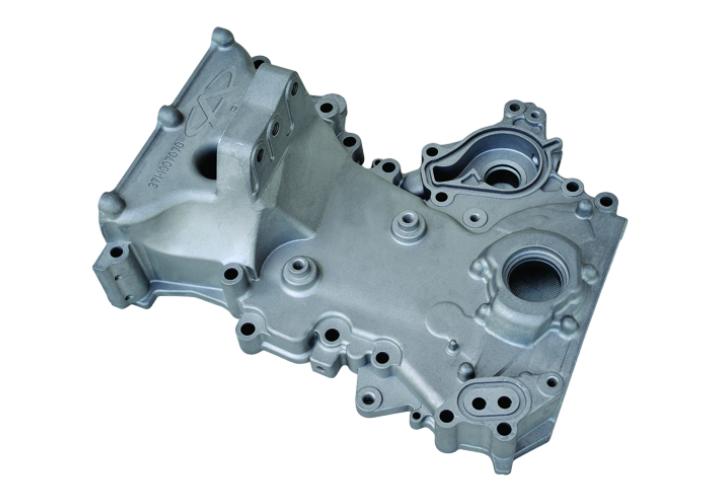
2. Advantages of mold manufacturing
Zinc alloy mold can produce high-quality molds through precision processing technology. Using advanced CNC processing technology, key parts such as the mold cavity and core can be accurately processed, and the tolerance is controlled within a very small range, thereby ensuring the consistency of the quality of the products produced.
Zinc alloy is easy to surface treat, such as electroplating, spraying, etc. Surface treatment can improve the wear resistance and corrosion resistance of the mold and extend the service life of the mold. At the same time, the mold after surface treatment also has obvious improvement in demoulding performance, which is conducive to improving production efficiency.
3. Application Scope
Injection Molding Field
In injection molding production, Zinc alloy mold can be used to manufacture various plastic products. Such as small electronic equipment housings, toy parts, etc. Since the cost of Zinc alloy mold is relatively low, it has good adaptability for small batch and multi-variety injection molding production.
Die Casting Field
For some small zinc alloy die-casting products, Zinc alloy mold is an ideal choice. Like some decorative zinc alloy die-castings, such as badges, small ornaments, etc., Zinc alloy mold can be produced quickly and efficiently, and the mold can be flexibly adjusted according to market demand to meet different product design requirements.
Zinc alloy mold
Previous Page
Next Page
Previous Page
Next Page
30
2026-09
The Art of Crafting Durable Aluminum Casts for Industrial Applications
27
2026-09
The Essential Guide to Die Casting: Techniques, Applications, and Benefits
24
2026-09
How to Stay Ahead in Mold Forging: Insights for Manufacturers
21
2026-09
The Essential Guide to Forging Molds: Understanding Their Importance in Manufacturing
18
2026-09
Zinc Die Casting Parts: A Premier Cost-Effective Solution for Customized Manufacturing
15
2026-09
The Intricacies of Zinc Alloy Die Casting: A Comprehensive Overview
12
2026-09
The Art of Creating Intricate Designs Through Aluminum Prototype Casting
GM Diecasting Technology Co.,Limited.
Add:Building 1-5, Chongke Road, Shipai Town, Dongguan City, Guangdong Province
Email:henry@gmdiecastingtech.com
Email:lily@gmdiecastingtech.com
Tel:+8613680864695