18

2024

-

10

Die casting alloy

Author:


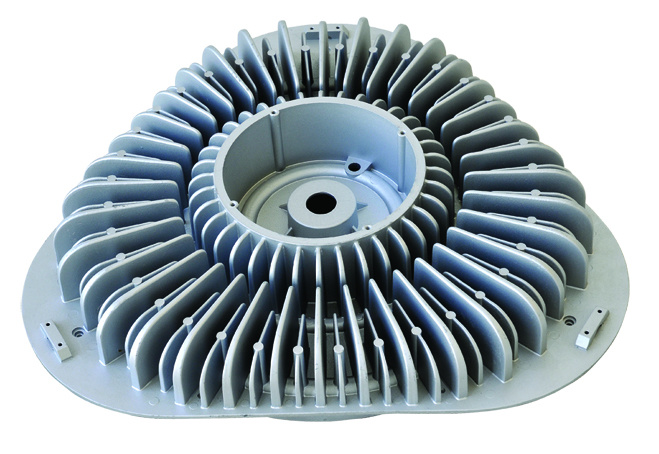
Product name: lamp radiator die casting alloy

Molding process: cold-type die-casting

Product material: ADC 12-aluminum alloy

Surface treatment: electrophoresis / powder spraying

Opening mold cycle: 45 days

Production cycle: 45 days

Other remarks: Support for graph customization
die casting alloy

Die casting alloy is a material that plays a key role in the die casting process.

Die casting alloy has a series of outstanding characteristics. They usually have good fluidity and can quickly and evenly fill the mold cavity during the die casting process, thereby ensuring the integrity and accuracy of the molding. At the same time, they have high strength and hardness, so that the die casting products can withstand certain pressure and load. In addition, die casting alloy also has good corrosion resistance and can maintain stable performance under different environmental conditions.

Among the many die casting alloys, aluminum alloy is a widely used one. Aluminum alloy die casting alloy has a lighter density, which is a great advantage for products that pursue lightweight. It also has good thermal conductivity and electrical conductivity, and is suitable for some occasions that require thermal conduction and electrical properties. Magnesium alloy is also one of the common die casting alloys. Its density is smaller than that of aluminum alloy and has a better weight reduction effect, but the cost is relatively higher. Zinc alloy is favored for its good casting performance and low cost, and is often used in the manufacture of some daily necessities and small parts that do not require so much strength.

Die casting alloy

12

2025-12

The Essential Guide to Zinc Die Casting: Advantages and Applications

Zinc die casting is a highly efficient manufacturing process that utilizes molten zinc to create intricate and durable metal parts. This method is particularly favored in the manufacturing and processing machinery industry, especially in the realm of molds and die-casting. The process involves injecting molten zinc into a mold cavity under high pressure, which solidifies quickly to form precise co

09

2025-12

Innovative Designs Made Possible: The Influence of Die Casting Machines

Innovative Designs Made Possible: The Influence of Die Casting Machines Table of Contents 1. Introduction to Die Casting Machines 2. Understanding Die Casting: A Comprehensive Overview 3. Benefits of Using Die Casting Machines in Manufacturing 4. How Die Casting Machines Enable Innovative Designs 5. Applications of Die Casting Machines Across Various Industries 6. Future T

06

2025-12

Understanding Aluminum Die Casting: A Comprehensive Guide for Manufacturers

Aluminum die casting is a sophisticated manufacturing process widely used in the production of complex metal parts. This method utilizes molten aluminum, which is injected into a mold under high pressure. The result is a high-quality, precise, and lightweight product that is durable and corrosion-resistant. The importance of aluminum die casting in the manufacturing industry, especially in tooling

03

2025-12

The Future of Machining: Innovations in Aluminum Alloy Mold Advancements

The Future of Machining: Innovations in Aluminum Alloy Mold Advancements Table of Contents Introduction to Aluminum Alloy Molds Understanding Aluminum Alloys Benefits of Using Aluminum Alloy Molds Technological Advancements in Machining Processes Key Applications of Aluminum Alloy Molds Challenges in Aluminum Alloy Machining and Solutions Future Prospects of Aluminum A

30

2025-11

The Advantages and Applications of Zinc Alloy Molds in Manufacturing

Zinc alloy molds are an integral component in the realm of manufacturing, particularly in the production of mechanical hardware and tooling. These molds are crafted from zinc alloys, which are metal mixtures that typically include copper, aluminum, and magnesium, offering a unique combination of benefits that make them a popular choice in various applications. One of the primary advantages of zinc

27

2025-11

Exploring the Versatility of Zinc Alloy in Modern Applications

Exploring the Versatility of Zinc Alloy in Modern Applications Table of Contents 1. Introduction to Zinc Alloys 2. Key Properties of Zinc Alloys 3. Applications of Zinc Alloys in Various Industries 3.1 Automotive Industry 3.2 Electronics Sector 3.3 Construction and Architecture 3.4 Aerospace Engineering 4. Manufactu

24

2025-11

Exploring the Versatility and Applications of Aluminum Alloys

Aluminum alloys are engineered materials that combine aluminum with other elements, such as copper, magnesium, manganese, silicon, and zinc, to enhance their physical properties. This combination results in a wide range of aluminum alloys that exhibit improved strength, durability, corrosion resistance, and lightweight characteristics. As a result, they play a crucial role in numerous industries,

21

2025-11

Revolutionizing the World of Molding: The Advantages of Aluminum Casting

Revolutionizing the World of Molding: The Advantages of Aluminum Casting Table of Contents Introduction to Aluminum Casting What is Aluminum Casting? The Benefits of Aluminum Casting Cost-Effectiveness Lightweight and Durable Versatility in Application Sustainability The Manufacturing Process of Aluminum Castin