



03
2025
-
02
Design Considerations for Zinc Die Casting china
Author:
Zinc Die Casting design requires a comprehensive consideration of many factors to ensure the quality, functionality and economy of the product.
1. Product functional requirements
First, the functional requirements of the product in actual application must be clarified. For example, if it is an automotive component, the load, operating temperature range, wear resistance, etc. should be considered. If it is the shell of an electronic device, it is necessary to pay attention to functions such as electromagnetic shielding and heat dissipation. This determines the basic structure and performance parameters of Zinc Die Casting products. For example, for parts that bear a large load, it may be necessary to increase the wall thickness or use a reinforcing rib structure to increase the strength.
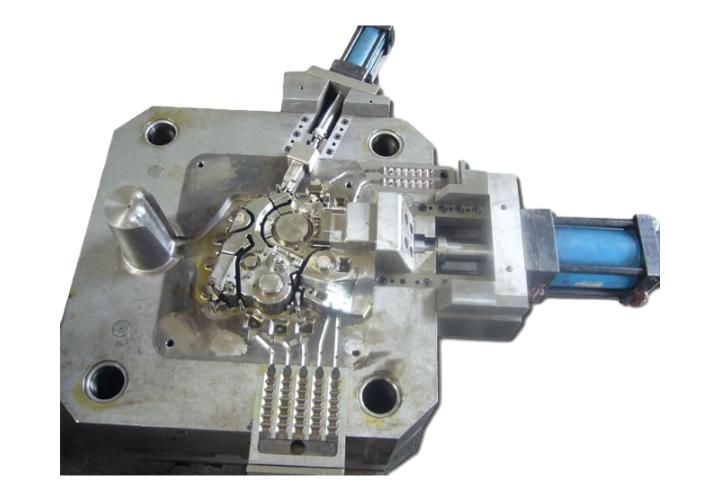
2. Feasibility of mold design
The design of Zinc Die Casting products must consider the feasibility of mold manufacturing and demolding. Complex internal structures may bring great challenges to mold manufacturing, increase costs and manufacturing cycles. In the design, the undercut structure should be avoided as much as possible. If it cannot be avoided, a reasonable slider or inclined top structure should be designed to achieve smooth demolding. At the same time, the parting surface of the mold should be selected reasonably to ensure that the zinc liquid can evenly fill the mold cavity and reduce defects such as trapped air and flow marks.
3. Zinc alloy material properties
Zinc alloy has its own specific material properties, such as fluidity, shrinkage rate, etc. When designing products, the reasonable range of wall thickness should be determined according to the fluidity of zinc alloy. Generally speaking, too thin wall thickness will make it difficult to fill zinc liquid, and too thick wall thickness may cause defects such as shrinkage holes and pores. The shrinkage rate of zinc alloy also needs to be considered. When designing products with high dimensional accuracy requirements, the shrinkage amount should be reserved to ensure that the product size meets the requirements.
4. Cost-effectiveness
On the premise of meeting functional and quality requirements, cost-effectiveness should be considered. Optimize product structure and reduce material waste. For example, reducing unnecessary wall thickness through reasonable structural design can not only reduce product weight, but also reduce raw material costs. At the same time, simplifying the mold structure can also help reduce mold manufacturing and maintenance costs.
18
2026-11
Understanding Prototype Aluminum Casting: A Key to Efficient Manufacturing
15
2026-11
Unleashing the Potential of Die Casting Mold in Modern Production
12
2026-11
Understanding Custom Aluminum Casting: A Key Process in Metal Manufacturing
09
2026-11
Optimizing Performance: The Essential Guide to Zinc Casting for Die Casting Tools
21
2026-10
Understanding Zinc Die Casting: A Comprehensive Guide for Manufacturing Professionals
18
2026-10
Empowering Manufacturers: The Benefits of Die Casting Machines
15
2026-10
Understanding Aluminum Die Casting: A Key Process in Metal Manufacturing
GM Diecasting Technology Co.,Limited.
Add:Building 1-5, Chongke Road, Shipai Town, Dongguan City, Guangdong Province
Email:henry@gmdiecastingtech.com
Email:lily@gmdiecastingtech.com
Tel:+8613680864695