



05
2025
-
07
Factors affecting the accuracy of aluminum die casting mold
Author:
The accuracy of aluminum die casting mold is directly related to the quality of die-casting products, and many factors will affect its accuracy.
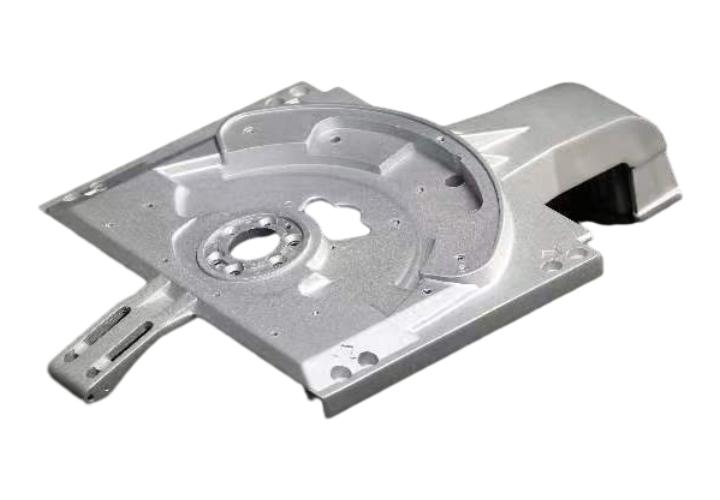
1. Mold design
Reasonableness of structural design
If the parting surface design of aluminum die casting mold is unreasonable, it may cause gaps when closing the mold, affecting the flash condition of die-casting products. If the demoulding slope is not designed properly, it will cause demoulding difficulties and even damage the mold, thus affecting the accuracy.
The design of the gate and runner system affects the flow state of the molten metal. If the runner size is inaccurate or the layout is unreasonable, the molten metal will flow unevenly and the pressure distribution will be uneven, thus affecting the dimensional accuracy of the casting.
Dimension calculation accuracy
When designing the mold, the size calculation of key parts such as the cavity and core must be accurate. If the shrinkage rate is calculated incorrectly, the size of the aluminum alloy parts after die casting will deviate from the design requirements, resulting in reduced accuracy.
2. Manufacturing process factors
Processing equipment accuracy
The processing equipment used, such as CNC machine tools, is not accurate enough to guarantee the processing size accuracy of mold parts. For example, in milling, drilling and other processing procedures, if the positioning accuracy of the machine tool is low, the shape and size of the processed mold parts will be deviated.
Processing process parameters
In cutting processing, improper settings of parameters such as cutting speed, feed rate and cutting depth will cause problems such as excessive cutting force and excessive cutting heat, which will cause part deformation and affect the overall accuracy of the mold.
Heat treatment process is also critical. If the heating speed, holding time and cooling speed are not well controlled during the heat treatment process, the mold will deform, crack and other problems, seriously affecting the accuracy.
3. Assembly link
Assembly accuracy
When assembling aluminum die casting mold, the assembly accuracy of each component is very high. For example, if the assembly gap between the core and the cavity, the matching accuracy of the guide column and the guide sleeve, etc. do not meet the requirements, it will affect the opening and closing movement accuracy of the mold, and then affect the accuracy of the die-casting product.
30
2026-09
The Art of Crafting Durable Aluminum Casts for Industrial Applications
27
2026-09
The Essential Guide to Die Casting: Techniques, Applications, and Benefits
24
2026-09
How to Stay Ahead in Mold Forging: Insights for Manufacturers
21
2026-09
The Essential Guide to Forging Molds: Understanding Their Importance in Manufacturing
18
2026-09
Zinc Die Casting Parts: A Premier Cost-Effective Solution for Customized Manufacturing
15
2026-09
The Intricacies of Zinc Alloy Die Casting: A Comprehensive Overview
12
2026-09
The Art of Creating Intricate Designs Through Aluminum Prototype Casting
GM Diecasting Technology Co.,Limited.
Add:Building 1-5, Chongke Road, Shipai Town, Dongguan City, Guangdong Province
Email:henry@gmdiecastingtech.com
Email:lily@gmdiecastingtech.com
Tel:+8613680864695