



11
2025
-
06
How to improve the surface finish of zinc alloy die casting
Author:
The surface finish of zinc alloy die casting directly affects its appearance quality and market competitiveness. The following are some effective ways to improve the surface finish of zinc alloy die casting.
The surface roughness of the mold should be as low as possible. When manufacturing the mold, high-precision processing technology, such as precision milling, fine grinding after EDM, etc., is used to make the surface of the mold cavity smooth. At the same time, the runner system of the mold is reasonably designed to ensure that the zinc alloy melt flows smoothly in the mold to avoid turbulence and surface defects.

Select zinc alloy raw materials with high purity and few impurities. Impurities may affect the fluidity of the melt during the die casting process, thereby affecting the surface quality. Before die casting, preheating the raw materials will help improve the fluidity of the melt and make the die casting process more uniform.
Appropriate die casting pressure, speed and temperature have a significant effect on surface finish. Properly increasing the die-casting pressure can make the zinc alloy melt better fill the mold cavity and reduce surface defects such as pores; control the die-casting speed to avoid too fast to cause air entrainment or too slow to cause cold shut; accurately control the die-casting temperature to ensure that the fluidity of the melt is in the best state.
The use of post-processing technology can further improve the surface finish. For example, mechanical polishing can be carried out by gradually polishing with sandpaper or polishing wheels of different particle sizes to effectively remove minor surface defects. In addition, surface treatment technologies such as chemical polishing and electroplating can also improve the surface finish of the product to a certain extent, making it brighter and more beautiful.
Through comprehensive consideration and optimization of molds, raw materials, die-casting processes and post-processing, the surface finish of zinc alloy die casting can be effectively improved to meet the market demand for high-quality products.
zinc alloy die casting
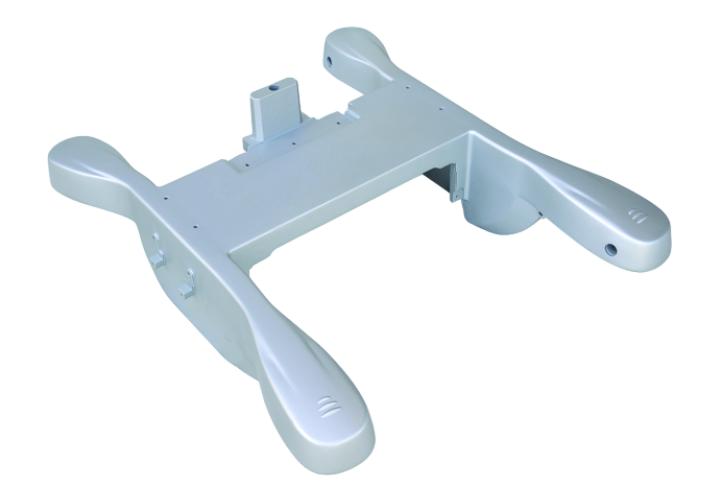
30
2026-09
The Art of Crafting Durable Aluminum Casts for Industrial Applications
27
2026-09
The Essential Guide to Die Casting: Techniques, Applications, and Benefits
24
2026-09
How to Stay Ahead in Mold Forging: Insights for Manufacturers
21
2026-09
The Essential Guide to Forging Molds: Understanding Their Importance in Manufacturing
18
2026-09
Zinc Die Casting Parts: A Premier Cost-Effective Solution for Customized Manufacturing
15
2026-09
The Intricacies of Zinc Alloy Die Casting: A Comprehensive Overview
12
2026-09
The Art of Creating Intricate Designs Through Aluminum Prototype Casting
GM Diecasting Technology Co.,Limited.
Add:Building 1-5, Chongke Road, Shipai Town, Dongguan City, Guangdong Province
Email:henry@gmdiecastingtech.com
Email:lily@gmdiecastingtech.com
Tel:+8613680864695