



14
2025
-
06
Discussion on post-processing technology of zinc alloy die casting
Author:
After die-casting, the post-processing process of zinc alloy die casting plays a vital role in its final performance and appearance.
1. Mechanical processing post-processing
Polishing
Mechanical polishing is a common method. By using sandpaper or polishing wheels of different particle sizes, the surface of the product is polished gradually from coarse to fine. Coarse polishing can quickly remove more obvious defects such as parting lines and gate marks generated during the die-casting process; fine polishing can make the surface of the product as bright as a mirror, improve the beauty of the product, and is suitable for products such as decorations and precision instrument shells that have high requirements for appearance.
Grinding
Grinding is mainly to correct the dimensional accuracy of the product. During the die-casting process, due to mold wear or some deviations in the die-casting process, the size of the product may have a certain error. Grinding can accurately remove a small amount of material so that the product reaches the size required by the design, and it can also improve the surface roughness.
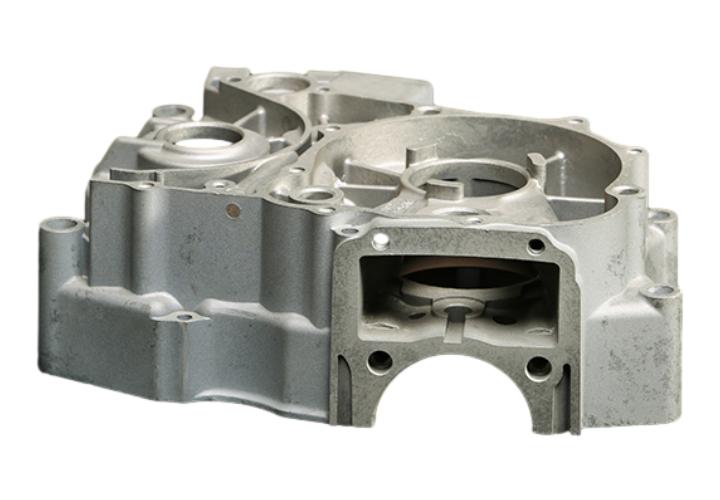
2. Surface treatment
Electroplating
Electroplating is to plate a layer of metal film on the surface of zinc alloy die casting, such as chrome plating, nickel plating, etc. Chrome plating can improve the corrosion resistance of the product, and make the surface of the product have a metallic luster and a more beautiful appearance; nickel plating can not only improve corrosion resistance, but also increase the hardness of the product surface. However, before electroplating, the product needs to be strictly cleaned and activated to ensure the adhesion of the electroplating layer.
Chemical conversion film treatment
This treatment method is to form a protective film on the surface of the product through chemical reaction, such as passivation treatment. The passivation film can effectively prevent the corrosion of the zinc alloy surface and improve the weather resistance of the product. It is relatively simple to operate and has low cost. It is widely used in some zinc alloy die castings that do not have particularly high requirements for appearance but have certain requirements for corrosion resistance.
Through the reasonable application of these post-treatment processes, the appearance and performance of zinc alloy die casting can be significantly improved, thereby expanding its application range and improving the market competitiveness of the product.
30
2026-09
The Art of Crafting Durable Aluminum Casts for Industrial Applications
27
2026-09
The Essential Guide to Die Casting: Techniques, Applications, and Benefits
24
2026-09
How to Stay Ahead in Mold Forging: Insights for Manufacturers
21
2026-09
The Essential Guide to Forging Molds: Understanding Their Importance in Manufacturing
18
2026-09
Zinc Die Casting Parts: A Premier Cost-Effective Solution for Customized Manufacturing
15
2026-09
The Intricacies of Zinc Alloy Die Casting: A Comprehensive Overview
12
2026-09
The Art of Creating Intricate Designs Through Aluminum Prototype Casting
GM Diecasting Technology Co.,Limited.
Add:Building 1-5, Chongke Road, Shipai Town, Dongguan City, Guangdong Province
Email:henry@gmdiecastingtech.com
Email:lily@gmdiecastingtech.com
Tel:+8613680864695