



12
2025
-
07
Methods to improve the efficiency of precision aluminum casting
Author:
Precision aluminum casting occupies an important position in modern manufacturing industry. Improving its efficiency is of great significance to meet market demand and improve corporate competitiveness.
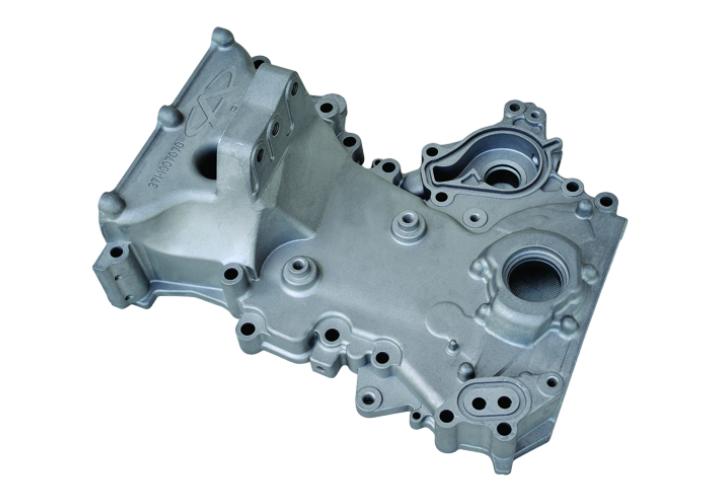
1. Optimize mold design and manufacturing
Mold is the key link of precision aluminum casting. In terms of design, advanced computer-aided design (CAD) software is used to accurately plan the structure and cavity size of the mold to ensure that the flow path of the aluminum liquid in the mold is the shortest and smoothest. By simulating and analyzing the filling process of aluminum liquid, possible problems can be found in advance and optimized. In manufacturing, high-precision processing equipment, such as CNC machining centers, are used to improve the manufacturing accuracy of the mold and reduce the number of mold trials. The material selection of the mold is also very important. The selection of materials with good thermal conductivity and wear resistance can improve the service life and heat dissipation efficiency of the mold, thereby indirectly improving the casting efficiency.
2. Improve the aluminum liquid processing process
Ensuring the purity of aluminum liquid is the basis for improving efficiency. Use efficient refining equipment to remove impurities and gases in aluminum liquid, such as using a rotary degassing device. Precisely control the temperature of the aluminum liquid, use advanced temperature sensors and heating and cooling systems to keep the aluminum liquid within the optimal pouring temperature range. This can avoid incomplete filling or solidification defects caused by inappropriate temperature, reduce scrap rate, and improve production efficiency.
3. Optimize casting process parameters
Reasonable parameters such as pouring speed, pressure and solidification time have a great impact on efficiency. Through experiments and experience accumulation, determine the optimal pouring speed to ensure that the aluminum liquid fills the mold cavity quickly and smoothly. Appropriate pouring pressure can enable the aluminum liquid to better fill small parts. For solidification time, according to the shape and size of the casting, use appropriate cooling methods such as air cooling, water cooling or combined cooling to accelerate the solidification process and shorten the production cycle.
4. Introduce automated equipment
Automated equipment can reduce the time and error of manual operation. For example, the use of automatic pouring machines can accurately control the pouring amount and pouring speed; robots can perform operations such as picking up and cleaning, improve the continuity and stability of production, and thus improve the overall precision aluminum casting efficiency.
Precision aluminum casting
Previous Page
30
2026-09
The Art of Crafting Durable Aluminum Casts for Industrial Applications
27
2026-09
The Essential Guide to Die Casting: Techniques, Applications, and Benefits
24
2026-09
How to Stay Ahead in Mold Forging: Insights for Manufacturers
21
2026-09
The Essential Guide to Forging Molds: Understanding Their Importance in Manufacturing
18
2026-09
Zinc Die Casting Parts: A Premier Cost-Effective Solution for Customized Manufacturing
15
2026-09
The Intricacies of Zinc Alloy Die Casting: A Comprehensive Overview
12
2026-09
The Art of Creating Intricate Designs Through Aluminum Prototype Casting
GM Diecasting Technology Co.,Limited.
Add:Building 1-5, Chongke Road, Shipai Town, Dongguan City, Guangdong Province
Email:henry@gmdiecastingtech.com
Email:lily@gmdiecastingtech.com
Tel:+8613680864695