



31
2025
-
03
Zinc die casting parts from china
Author:
1. Material properties
Zinc is a metal material with many excellent properties. Zinc die casting parts have good strength and hardness and can withstand certain external impact and pressure. This allows them to play a stable role in various mechanical structures. For example, in some parts of small engines, zinc die casting parts can ensure the reliability of the engine during operation.
Zinc has excellent surface treatment performance. It can be easily electroplated, painted and other surface treatments, which can not only improve the beauty of the parts, but also enhance their corrosion resistance. Zinc die casting parts with proper surface treatment can be used in harsh environments, such as some outdoor equipment housings.
Zinc has a relatively low melting point, which makes the zinc die casting process less energy-consuming and easier to form complex shapes during the die casting process.
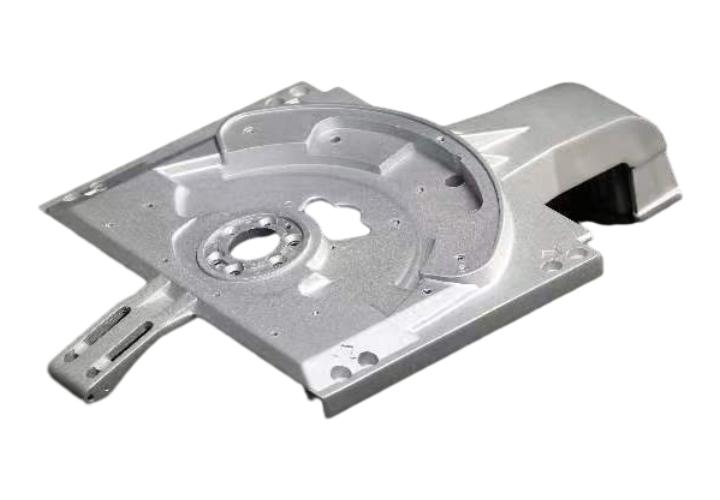
2. Advantages of die casting process
Zinc die casting process can produce parts with extremely high precision. Through precise mold design and pressure control during die casting, zinc die casting parts with extremely small dimensional tolerances can be produced. This is very critical for products that require high matching accuracy, such as small parts in precision instruments.
One-time molding of complex shapes can be achieved. Whether it is a part with an internal cavity, a thin-walled structure or a fine texture, the zinc die casting process can handle it. For example, some electronic product shells with exquisite appearance designs can be efficiently produced using the zinc die casting process.
3. Application Scope
Electronic and electrical industry
In the field of electronic and electrical appliances, zinc die casting parts are widely used. Such as brackets, heat sinks and other components of mobile phones, tablets and other devices. Zinc die casting parts can meet the requirements of electronic products for miniaturization, lightness and high performance.
Automotive parts
Some interior parts and small functional parts in automobiles are also often made of zinc die casting parts. For example, some knobs and small brackets in the car, zinc die casting parts can not only ensure their functionality, but also strike a balance between cost and quality.
Hardware products
In terms of hardware products, zinc die casting parts can be used to manufacture various locks, handles, etc. It can provide a stable structure and good appearance texture.
Zinc die casting parts
Previous Page
Next Page
Previous Page
Next Page
30
2026-09
The Art of Crafting Durable Aluminum Casts for Industrial Applications
27
2026-09
The Essential Guide to Die Casting: Techniques, Applications, and Benefits
24
2026-09
How to Stay Ahead in Mold Forging: Insights for Manufacturers
21
2026-09
The Essential Guide to Forging Molds: Understanding Their Importance in Manufacturing
18
2026-09
Zinc Die Casting Parts: A Premier Cost-Effective Solution for Customized Manufacturing
15
2026-09
The Intricacies of Zinc Alloy Die Casting: A Comprehensive Overview
12
2026-09
The Art of Creating Intricate Designs Through Aluminum Prototype Casting
GM Diecasting Technology Co.,Limited.
Add:Building 1-5, Chongke Road, Shipai Town, Dongguan City, Guangdong Province
Email:henry@gmdiecastingtech.com
Email:lily@gmdiecastingtech.com
Tel:+8613680864695