



08
2025
-
06
Zinc die casting has special requirements for mold design
Author:
Zinc die casting is an important metal forming process. In this process, mold design has special requirements, which are directly related to the quality, production efficiency and cost of die-casting products.
First of all, the material selection of the mold is crucial. Due to the relatively low melting point of zinc, the mold needs to withstand repeated thermal shocks during the die-casting process. Therefore, the mold material must have good thermal fatigue resistance. Hot work die steel such as H13 steel is often selected. It can maintain good stability during the thermal cycle of zinc die casting and prevent premature cracking and other damage to the mold.
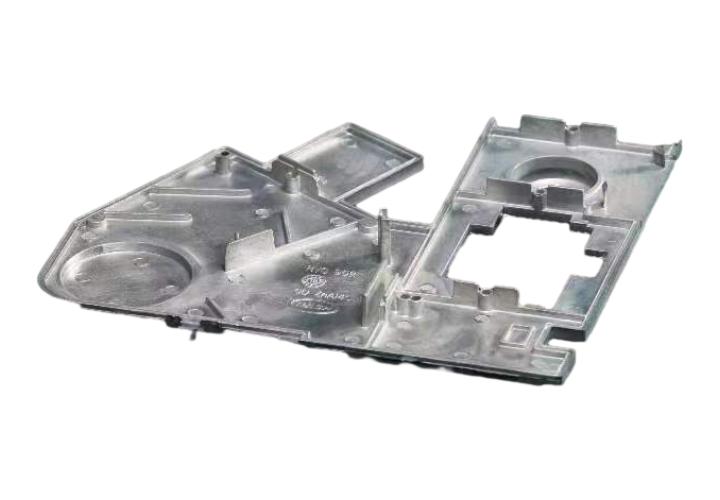
In terms of the structural design of the mold, the design of the gate system needs to be carefully considered. The gate of zinc die casting must ensure that the zinc liquid can fill the mold cavity smoothly, quickly and evenly. The appropriate gate size and shape can avoid turbulence in the zinc liquid during the filling process and prevent defects such as pores from being formed by the air being drawn in. For example, the pin-point gate can achieve high-speed injection of zinc liquid while leaving a small gate mark after the product is demolded.
The demolding mechanism is also a key part of the zinc die casting mold design. Zinc die casting products need to be smoothly ejected from the mold after molding. Due to the shrinkage characteristics of zinc, the mold demoulding slope should be designed reasonably. Generally speaking, the demoulding slope is larger than other metal die castings to ensure that the product can be easily demoulded without damage. In addition, the layout of the ejector device should be uniform to ensure that the force is balanced when ejecting the product to avoid product deformation.
The cooling system is also indispensable for zinc die casting molds. The zinc liquid cools and solidifies quickly in the mold, and an effective cooling system can improve production efficiency. The design of the cooling channel should be as close to the cavity surface as possible to achieve fast and uniform cooling, but it should not affect the overall strength of the mold.
The precision requirements of the mold are also very high. Zinc die casting can produce products with higher precision, which requires the dimensional accuracy and surface roughness of the mold to meet strict standards. For example, the roughness of the cavity surface should be low to ensure the smoothness of the surface of the zinc die casting product.
Zinc die casting
30
2026-09
The Art of Crafting Durable Aluminum Casts for Industrial Applications
27
2026-09
The Essential Guide to Die Casting: Techniques, Applications, and Benefits
24
2026-09
How to Stay Ahead in Mold Forging: Insights for Manufacturers
21
2026-09
The Essential Guide to Forging Molds: Understanding Their Importance in Manufacturing
18
2026-09
Zinc Die Casting Parts: A Premier Cost-Effective Solution for Customized Manufacturing
15
2026-09
The Intricacies of Zinc Alloy Die Casting: A Comprehensive Overview
12
2026-09
The Art of Creating Intricate Designs Through Aluminum Prototype Casting
GM Diecasting Technology Co.,Limited.
Add:Building 1-5, Chongke Road, Shipai Town, Dongguan City, Guangdong Province
Email:henry@gmdiecastingtech.com
Email:lily@gmdiecastingtech.com
Tel:+8613680864695