



23
2025
-
05
Explore the design secrets of aluminum die casting mold
Author:
The design of aluminum die casting mold is like a precise engineering art, which contains many mysteries.
In the initial stage of aluminum die casting mold design, the design of the gate is one of the key mysteries. The location of the gate is like a lighthouse directing the flow of aluminum liquid, which determines the initial path of aluminum liquid entering the cavity. Reasonable gate location can ensure that the aluminum liquid fills the cavity evenly and avoids vortex or air entrapment. The size of the gate is also important. A too small gate will make the aluminum liquid flow too fast, resulting in jetting, making it difficult to discharge the air in the cavity, thus forming pores in the casting; while a too large gate may make the aluminum liquid flow too slowly and fail to fill the entire cavity, causing material shortage.
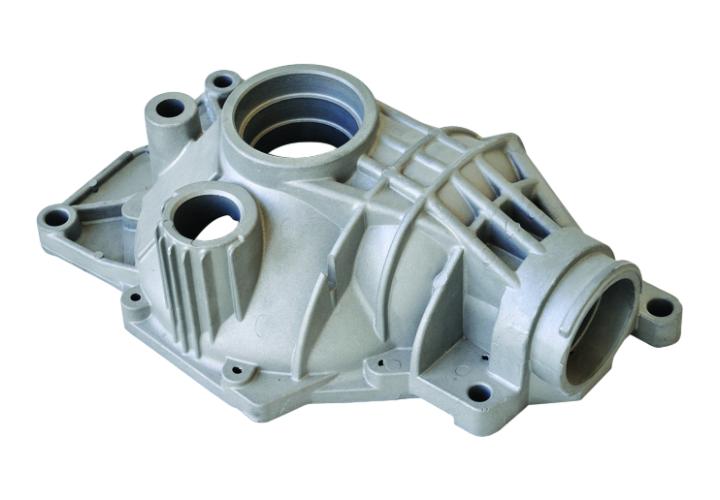
The design of the runner system is like building a highway for aluminum liquid. Factors such as the length, diameter and roughness of the runner affect the flow resistance of aluminum liquid. A short, thick and smooth runner allows aluminum liquid to flow to the cavity at a stable speed and pressure, ensuring uniform quality and temperature distribution of aluminum liquid.
The determination of the parting surface is also an important part of aluminum die casting mold design. It needs to comprehensively consider factors such as the shape of the casting, the convenience of demolding, and the difficulty of mold processing and manufacturing. A well-designed parting surface can ensure the smooth demolding of the casting while reducing the occurrence of defects such as flash.
In addition, the design of the exhaust system should not be underestimated. During the aluminum die casting process, if the air in the cavity cannot be discharged in time, it will be drawn into the aluminum liquid to form pores. Cleverly designing the exhaust groove or using the gaps of structures such as inserts and push rods for exhaust can effectively improve the quality of the casting.
The cooling system of the mold is like a "temperature regulator" for the mold. Reasonable layout of the cooling channel can quickly take away the heat transferred from the aluminum liquid to the mold, realize balanced control of the mold temperature, thereby improving production efficiency and ensuring the dimensional accuracy and organizational performance of the casting. In short, the design secret of the aluminum die casting mold lies in the precise grasp and clever combination of every detail to achieve efficient and high-quality aluminum die casting production.
aluminum die casting mold
30
2026-09
The Art of Crafting Durable Aluminum Casts for Industrial Applications
27
2026-09
The Essential Guide to Die Casting: Techniques, Applications, and Benefits
24
2026-09
How to Stay Ahead in Mold Forging: Insights for Manufacturers
21
2026-09
The Essential Guide to Forging Molds: Understanding Their Importance in Manufacturing
18
2026-09
Zinc Die Casting Parts: A Premier Cost-Effective Solution for Customized Manufacturing
15
2026-09
The Intricacies of Zinc Alloy Die Casting: A Comprehensive Overview
12
2026-09
The Art of Creating Intricate Designs Through Aluminum Prototype Casting
GM Diecasting Technology Co.,Limited.
Add:Building 1-5, Chongke Road, Shipai Town, Dongguan City, Guangdong Province
Email:henry@gmdiecastingtech.com
Email:lily@gmdiecastingtech.com
Tel:+8613680864695