



16
2025
-
04
How to optimize the structure of steel mold for aluminum casting
Author:
In the aluminum casting process, the structural optimization of steel mold for aluminum casting is crucial. This is not only related to the quality of the casting, but also affects the production efficiency and cost.
First, start with the runner system. Reasonable design of the size and shape of the gate and runner can ensure that the aluminum liquid flows smoothly and evenly in the mold. For example, the use of a gradual flow channel diameter can reduce the flow rate change of the aluminum liquid and avoid turbulence and air entrainment. The location of the gate should be selected where the aluminum liquid can quickly and evenly fill the cavity to avoid defects such as cold shut or pores.
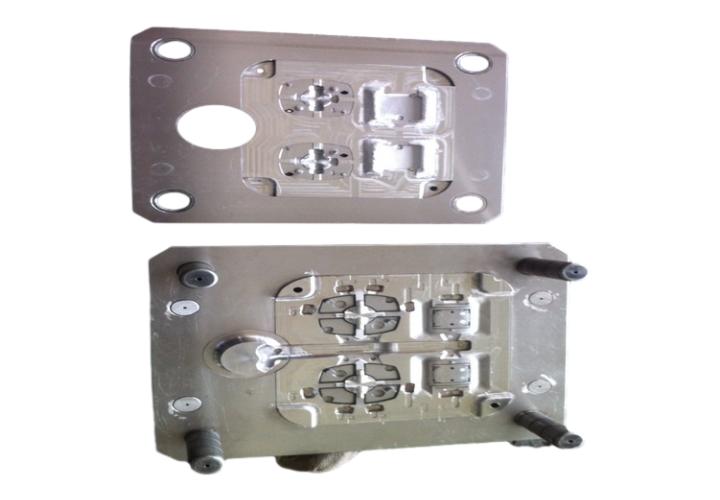
Secondly, optimize the cavity structure. The surface roughness of the cavity should be properly controlled, and the smooth surface is conducive to the flow and demolding of the aluminum liquid. At the same time, the uniformity of the wall thickness of the cavity should be considered to avoid local excessive thickness or thinness. Too thick will lead to slow cooling and affect production efficiency; too thin may not be able to withstand the pressure of the aluminum liquid, causing deformation or rupture of the mold. Finite element analysis and other technical means can be used to simulate the pressure distribution during the aluminum liquid filling process, thereby optimizing the cavity wall thickness.
Furthermore, the cooling structure of the steel mold for aluminum casting should be strengthened. An efficient cooling system can significantly shorten the casting cycle. The cooling pipes can be reasonably arranged inside the mold, and the spacing and diameter of the pipes should be adjusted according to the size and shape of the mold. Use a coolant with high cooling efficiency, and match the flow direction of the coolant with the solidification direction of the aluminum liquid to promote rapid and uniform cooling of the aluminum parts.
In addition, the demolding structure of the steel mold for aluminum casting also needs to be carefully designed. Reasonable demolding slopes, the position and number of ejection mechanisms can ensure smooth demolding of aluminum castings and reduce damage to castings and molds during demolding. For example, increasing the distribution density of ejection points can make the demolding force act more evenly on the casting.
30
2026-09
The Art of Crafting Durable Aluminum Casts for Industrial Applications
27
2026-09
The Essential Guide to Die Casting: Techniques, Applications, and Benefits
24
2026-09
How to Stay Ahead in Mold Forging: Insights for Manufacturers
21
2026-09
The Essential Guide to Forging Molds: Understanding Their Importance in Manufacturing
18
2026-09
Zinc Die Casting Parts: A Premier Cost-Effective Solution for Customized Manufacturing
15
2026-09
The Intricacies of Zinc Alloy Die Casting: A Comprehensive Overview
12
2026-09
The Art of Creating Intricate Designs Through Aluminum Prototype Casting
GM Diecasting Technology Co.,Limited.
Add:Building 1-5, Chongke Road, Shipai Town, Dongguan City, Guangdong Province
Email:henry@gmdiecastingtech.com
Email:lily@gmdiecastingtech.com
Tel:+8613680864695